
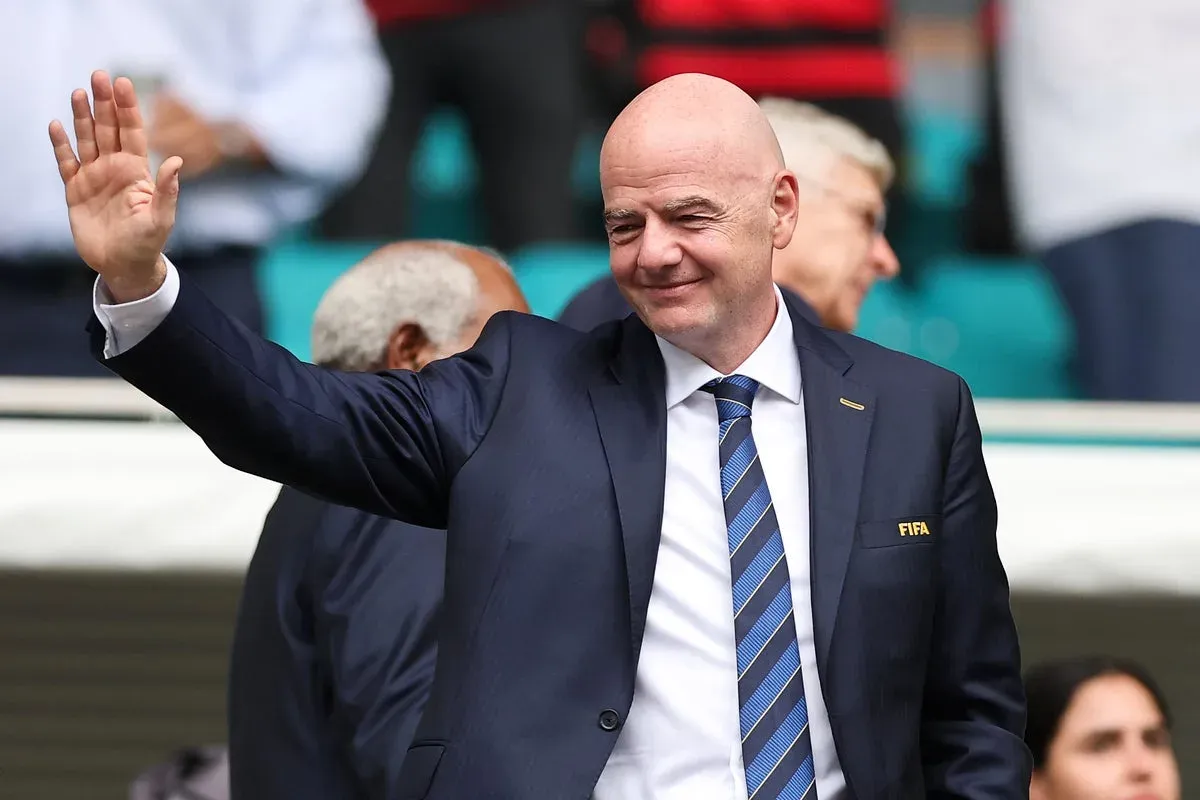
Gianni Infantino is facing the most serious challenge to his FIFA presidency since taking office in 2016, after a plan to sell private stakes in the World Cup triggered a coordinated revolt across world football. Within days of the 2026 tournament’s conclusion, three confederations — UEFA, the Asian Football Confederation, and Concacaf — have rejected the proposal, with UEFA going as far as threatening a full boycott of future FIFA competitions if it proceeds.
Together, those three bodies represent 143 of FIFA’s 211 member associations. That arithmetic means Infantino cannot secure the votes needed to push the plan through if their coalition holds when a vote of member associations takes place next month.
Senior Adviser Resigns in Protest
The political damage deepened on Friday when Carlos Cordeiro, one of Infantino’s most senior advisers and a former chief of US Soccer, resigned with immediate effect. Cordeiro, who had also served as a senior adviser to the White House taskforce on the 2026 World Cup, said he could not remain while FIFA considered selling off a permanent stake in its flagship tournament, according to The Guardian.
In his resignation statement, Cordeiro argued that the deal was harmful to FIFA’s member associations, to football as a whole, and to the game’s long-term future. He pointed out that FIFA already holds substantial debt-free reserves and therefore has no compelling financial reason to hand a permanent stake to outside investors. He also questioned the lack of any transparent or competitive process, asking who benefits, what governance would be in place, and what investors would ultimately gain.
The Independent reported that Infantino’s long-standing adviser described the proposal as mortgaging football’s future without justification.
The Proposal and FIFA’s Defence
The scheme centres on a new commercial entity called FIFA Forward Enterprise, through which private investors would acquire a stake in World Cup revenues. The Independent reports the plan had been in development for over a year. FIFA issued a statement in the early hours of Friday morning insisting it would press ahead with a consultation process, arguing that the backlash was based on inaccurate media reporting.
That position is becoming increasingly difficult to sustain. The AFC, while stopping short of matching UEFA’s boycott threat, issued a statement saying the proposal cannot realistically achieve the consensus needed to move forward and called for an urgent review of FIFA’s governance and decision-making structure.
Infantino’s Position Under Threat
The post-World Cup period had appeared to be one of personal triumph for Infantino. He had described the tournament as the most outstanding ever and used its commercial success to project confidence and authority. That confidence now looks misplaced.
Writing in The Independent, journalist Jamie Braidwood argued the worldwide rejection of the sell-off proposals must now stand as a broader rejection of Infantino himself, noting that even figures within FIFA’s own structures have turned against him. This follows a broader pattern of concern about how decisions are made at the top of world football, as covered in UEFA’s Boycott Threat Reveals How Infantino Misjudged the Room and Three Confederations Unite Against FIFA’s Private Investor Push on nowscore.co.
Whether Infantino withdraws the proposals or forces a vote he is likely to lose, his grip on the FIFA presidency has rarely looked more fragile.